Subterranean termite treatment in Columbus stops the destructive foraging of Reticulitermes flavipes , commonly known as the eastern subterranean termite. According to biological data from the Ohio State University…
Subterranean termite treatment in Columbus stops the destructive foraging of Reticulitermes flavipes, commonly known as the eastern subterranean termite. According to biological data from the Ohio State University Extension, these colonies live below the frost line in damp soil and enter homes through hairline cracks in masonry, foundation wall voids, and expansion joints. In older brick cottages throughout German Village and Victorian Village, termites breach historical mortar joints beneath dirt-floor cellars. Newer slab-on-grade additions in Clintonville and Upper Arlington face hidden perimeter exposure beneath landscaping mulch and settled patio slabs. EmberVale Exterminators uses clinical barrier protocols rather than temporary topical contact sprays, establishing an uninterrupted non-repellent toxic zone around all subterranean load points.
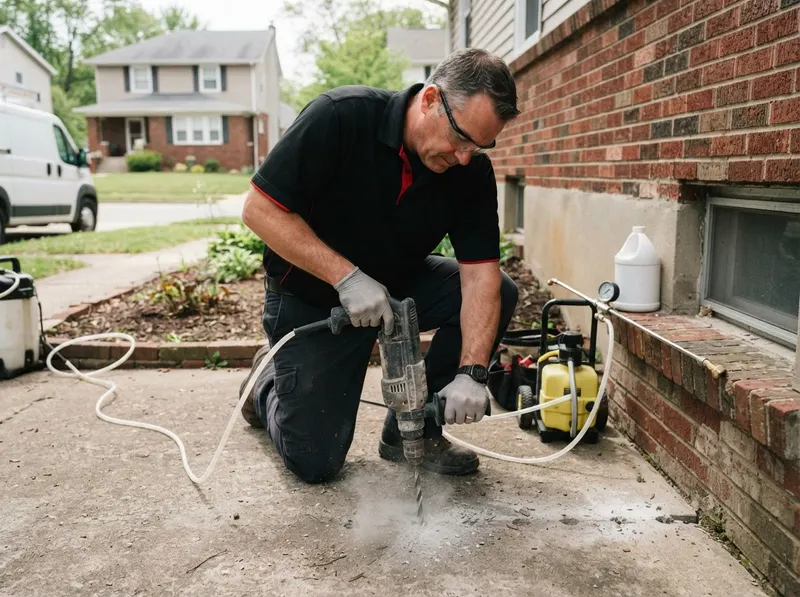
Treatment begins with deep trenching along exterior perimeter walls down to the footing, in line with building protection standards from the U.S. Department of Housing and Urban Development. When masonry steps or concrete walkways abut the foundation, technicians perform vertical rotary-hammer drilling every 10 to 12 inches to flood subterranean voids below the slab. The primary formulation utilized is a non-repellent liquid termiticide containing fipronil, which termites cannot detect. Workers pick up lethal micro-doses while moving through the soil matrix and spread the compound through the entire colony via grooming and food exchange, a process regulated by the United States Environmental Protection Agency. For properties alongside waterways near the Scioto Mile Promenade or wetlands bordering Franklin Park Conservatory and Botanical Gardens, low-disturbance bait stations containing noviflumuron or hexaflumuron are installed according to manufacturer spacing regulations.
Structural protection balances non-repellent liquid perimeters against long-term station baiting. Liquid barriers provide immediate, uninterrupted protection against active tunneling beneath basement walls, but require targeted drilling through interior tile or concrete porches in Franklinton and Olde Towne East. Low-profile bait stations monitor subterranean colony collapse over 60 to 180 days with zero masonry drilling, though they require scheduled annual inspections monitored under the standards of the National Pest Management Association. The choice depends on the presence of finished basements, exterior slab coverage, and utility proximity. Structural safety inspections must always comply with utility clearance standards established by Ohio 811 before any trenching begins.
Effective termite defense excludes secondary moisture factors that invite re-infestation. Technicians inspect downspout discharges, soil grades, and plumbing penetrations against environmental management guidelines from the Ohio Department of Agriculture. Direct wood-to-earth contact must be severed, including deck posts and structural forms left beneath ground level during original home construction, aligning with structural preservation guidance from the National Park Service Technical Preservation Services. Construction details follow moisture control criteria from the Building Science Corporation to maintain low humidity in crawlspaces. Routine baseline property reviews are logged under residential standards set by the American Society of Home Inspectors to ensure the chemical zone remains unbroken through seasonal ground shifts across Worthington and Grandview Heights.
Every job gets a firm, written price after a free on-site visit.
Tell us about your subterranean termite treatment job in Columbus and we'll send a clear, written quote, usually the same day.
 EmberVale Exterminators