Stinging insect defense demands structural containment rather than random surface sprays. In older architectural pockets such as Victorian Village, German Village, and Clintonville, social hymenopterans exploit…
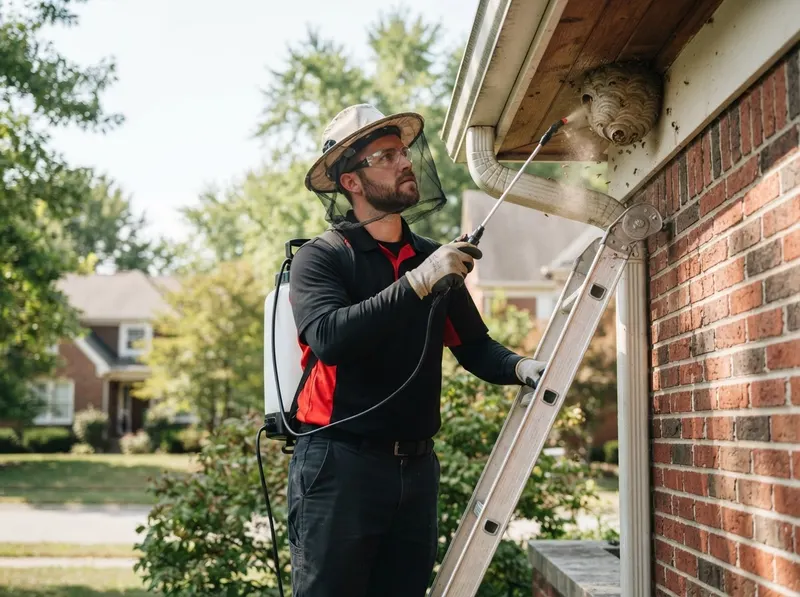
Stinging insect defense demands structural containment rather than random surface sprays. In older architectural pockets such as Victorian Village, German Village, and Clintonville, social hymenopterans exploit deteriorated mortar gaps, uncapped soffit vents, and uncaulked roof returns. Ground-nesting species, specifically yellowjackets (Ohio State University Department of Entomology notes seasonal subterranean shifts), routinely colonize rodent burrows and root cavities in expansive residential lawns across Upper Arlington, Bexley, and Worthington. When worker wasps access structural wall voids, airborne vibration and chemical distress pheromones cause erratic indoor penetrations through recessed lighting fixtures and baseboard cracks, presenting acute domestic sting risks documented by the CDC NIOSH Hymenoptera Guidelines. Mechanical eradication neutralizes the brood before physical nest extraction occurs, preventing defensive swarming.
Decision-fit analysis dictates the remediation method based on architecture and biology. Aerial bald-faced hornet nests secured to mature maple limbs in Olde Towne East or Grandview Heights require focused pyrethroid freeze applications delivered under controlled pressure, followed by physical detachment into sealed containment vessels. Conversely, concealed yellowjacket colonies within drywall voids mandate directional aerosol micro-injections registered through the EPA Pesticide Programs rather than destructive wall demolition. Surface spraying exterior brick or vinyl siding fails because it leaves reproductive queens and developing larvae protected inside the papery comb envelope. EmberVale Exterminators executes complete structural isolation: locating the primary thermal signature, applying localized contact treatments calibrated per the Ohio Department of Agriculture Pesticide Division standards, physically scraping attachment points, and applying copper mesh or silicone elastomers to the exterior ingress point. Standard work complies with strict occupational safety rules detailed by OSHA Respiratory Protection 1910.134 and elevated fall-protection requirements codified under OSHA Walking-Working Surfaces 1910.28.
Field execution proceeds through four methodical operational stages:
1. Thermal and acoustic inspection: The technician measures exterior flight velocity patterns and uses acoustic sensors to trace wall void boundaries without cutting sheetrock prematurely.
2. Targeted chemical neutralization: Non-repellent active formulations or micro-engineered dusts evaluated under National Pesticide Information Center Directives penetrate interior comb cells to eliminate adult foragers and reproductive castes.
3. Physical nest detachment: Technicians extract visible paper nests and brood scrapings using telescoping poles or direct hand extraction, sanitizing surfaces with enzymatic cleansers according to National Pest Management Association Guidelines to neutralize aggregation scent markers.
4. Perimeter exclusion: Structural gaps larger than 0.25 inches are sealed using exterior-grade polyurethane sealants and woven stainless steel barriers under Ohio Structural Pest Control Regulations, locking down fascia lines and frieze boards against re-colonization.
Every job gets a firm, written price after a free on-site visit.
Tell us about your stinging insect and wasp removal job in Columbus and we'll send a clear, written quote, usually the same day.
 EmberVale Exterminators