Commercial facilities face distinct structural vulnerabilities across regional business districts. Multi-story brick warehousing in the Short North Arts District and historic restaurant footprints throughout German…
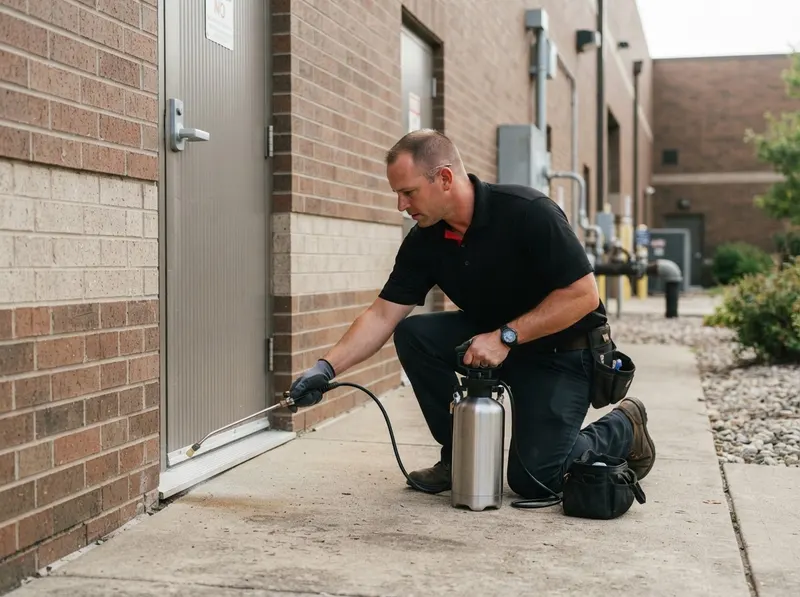
Commercial facilities face distinct structural vulnerabilities across regional business districts. Multi-story brick warehousing in the Short North Arts District and historic restaurant footprints throughout German Village share aging masonry, unsealed foundation penetrations, and shared utility lines that create subterranean thoroughfares for rodents. Industrial corridors along Franklinton encounter localized drainage pressure from the Scioto River watershed, accelerating rat burrowing along loading bays. EmberVale Exterminators executes architectural exclusion instead of cosmetic chemical surface spraying. Technicians identify mechanical entry gaps exceeding 0.25 inches around dock levelers, track overhead garage weather-stripping failures, and isolate sub-slab moisture points using protocols aligned with the EPA Integrated Pest Management Principles. The commercial approach establishes an impenetrable structural threshold, neutralizing infestations before biological vectors contaminate inventory or prep lines.
Selecting a dedicated program depends on operational classification, customer transit, and regulatory scrutiny. Food production facilities, institutional kitchens near the Ohio State University Campus, and healthcare suites require zero-chemical-drift protocols under strict FDA FSMA sanitation standards. These sites utilize interior mechanical multi-catch hardware and targeted pheromone traps rather than broadcast aerosols. Conversely, dry commercial distribution warehouses in Grandview Heights or corporate offices in Upper Arlington focus heavily on exterior perimeter protection, loading ramp bait barriers, and structural dock sweeps. The operational trade-off centers on service frequency versus perimeter exposure: higher-volume transit hubs accept bi-weekly inspection cadences to intercept incoming freight contamination, whereas closed professional complexes maintain biological stability with monthly perimeter reinforcement and perimeter bait maintenance adhering to CDC structural rodent containment guidelines.
Regulatory documentation serves as the backbone of every enterprise intervention. Municipal inspections from Columbus Public Health enforce rigid standards against cross-contamination, requiring transparent monitoring records and explicit product application thresholds governed by the Ohio Department of Agriculture Pesticide Regulation Division. Every monitoring station is indexed to verify placement dates, interior activity counts, and sanitation notes without relying on invasive chemical sprays that interrupt active business shifts. For facilities requiring formal third-party audits, programs follow guidelines established by the NSF Food Safety Certification framework and standards published by the National Pest Management Association. Service units confirm structural seals on expansion joints using industrial copper mesh, steel plate escutcheons, and elastomeric sealants evaluated by the ASTM International construction materials standards to halt pest incursions permanently.
Every job gets a firm, written price after a free on-site visit.
Tell us about your commercial pest defense programs job in Columbus and we'll send a clear, written quote, usually the same day.
 EmberVale Exterminators